
Click any image to view in full resolution

Click any image to view in full resolution
Description:
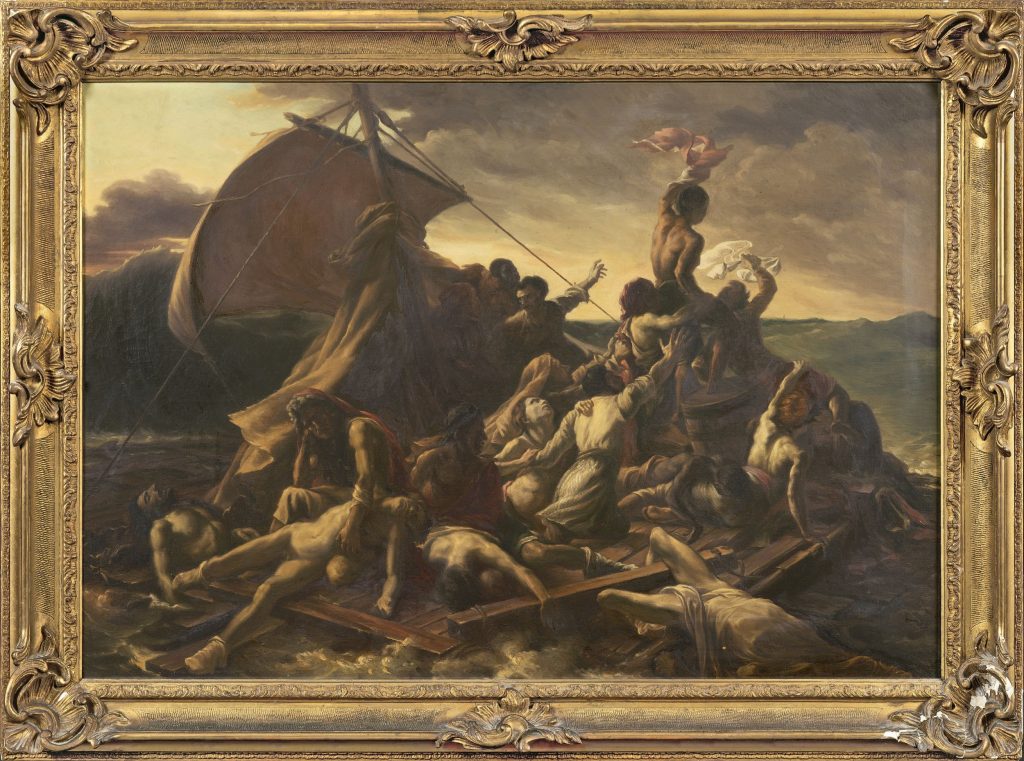
ECOLE DU XIXEME SIECLE Le Radeau de la Méduse Huile sur toile 81,5 x 116 cm The original painting, of very large dimensions (approximately 5 m high and 7 m wide), represents a tragic episode in the history of the French colonial navy: the sinking of the frigate Méduse . This frigate was responsible...
Read moreECOLE DU XIXEME SIECLE
Le Radeau de la Méduse
Huile sur toile
81,5 x 116 cm
The original painting, of very large dimensions (approximately 5 m high and 7 m wide), represents a tragic episode in the history of the French colonial navy: the sinking of the frigate Méduse . This frigate was responsible for transporting administrative equipment, civil servants and soldiers assigned to what would become the colony of Senegal . Following a navigational error, it ran aground onJuly 2, 1816on a sandbank , an obstacle well known to sailors located about sixty kilometers from the coast of present-day Mauritania [ 2 ] . Almost all of the passengers and crew left the wreck on4or theJuly 5by embarking on four canoes, two rowboats and a large, hastily constructed makeshift raft: at least 147 people stayed afloat on this raft, which was abandoned in the open sea by the six other boats that were supposed to tow it; only fifteen people were rescued twelve or thirteen days later, theJuly 17, by the Argus , a brig returning towards the wreck; the others died on the raft and were thrown into the sea after enduring hunger, dehydration, madness and even cannibalism . On board the Argus , five of the survivors nevertheless died en route, or shortly after their arrival in Saint-Louis .
The event became a national scandal in France, partly because a French captain serving the recently restored monarchy was held responsible for the disaster due to his incompetence.
Read less